
Reasons Your Dog Might Be Limping
Understanding the Causes, Warning Signs & When to Act
Seeing your dog limp can be worrying. Dogs are active, playful, and often hide pain, so when they start favoring one leg, it’s usually a sign that something isn’t right. Limping can range from mild and temporary to severe and life-threatening. Understanding the possible causes can help you respond quickly and protect your dog’s health.
In this article, we’ll explore common reasons dogs limp, symptoms to watch for, and why early attention is crucial.
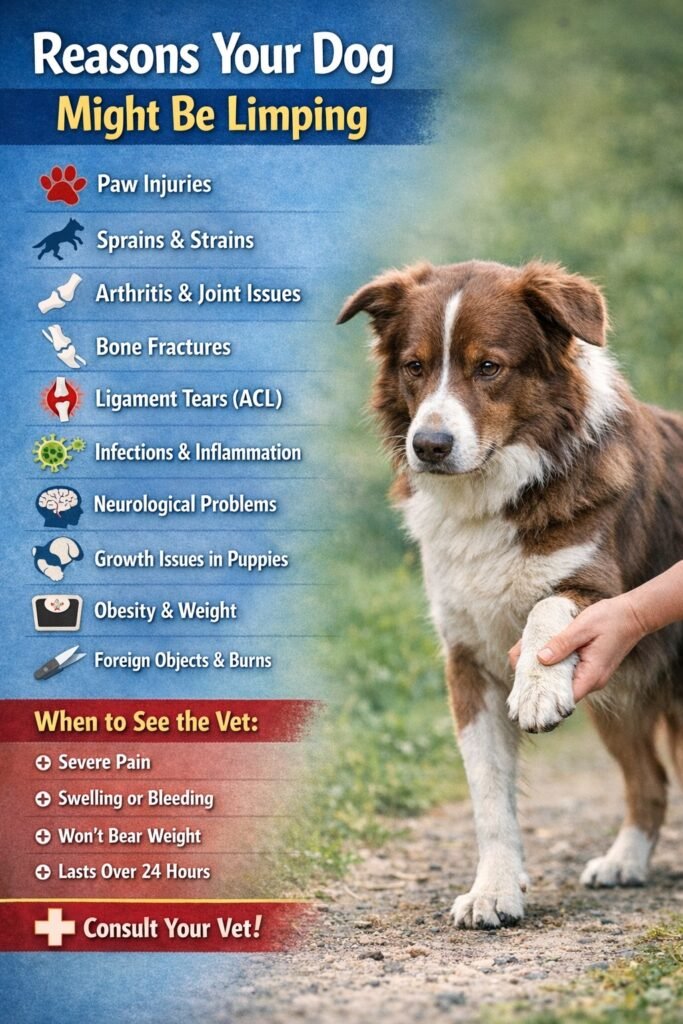
1. Minor Injuries and Paw Problems
One of the most common reasons for limping is a simple paw injury.
Possible causes:
- Thorns, glass, or small stones stuck in the paw
- Cuts or abrasions
- Torn or cracked paw pads
- Broken or overgrown nails
- Insect bites or stings
Signs to look for:
- Licking or chewing the paw
- Sudden limping after a walk
- Swelling or redness
- Bleeding
👉 What to do:
Check your dog’s paws carefully, clean the area, and remove any visible object. If bleeding, swelling, or pain continues, consult a vet.
2. Sprains, Strains & Muscle Injuries
Just like humans, dogs can pull a muscle or strain a ligament, especially after intense activity.
Common scenarios:
- Jumping from heights (sofas, beds, cars)
- Slipping on wet floors
- Over-exercising
- Sudden sharp turns while running
Symptoms:
- Limping that appears after play
- Stiffness after resting
- Pain when touched
- Reduced activity
👉 Why it matters:
Minor strains may heal with rest, but untreated injuries can worsen or cause long-term joint damage.
3. Joint Problems & Arthritis
Joint issues are a leading cause of chronic limping, especially in older dogs.
Common joint conditions:
- Arthritis
- Hip dysplasia
- Elbow dysplasia
- Luxating patella (kneecap slipping out of place)
Signs:
- Limping that worsens in cold weather
- Difficulty standing up
- Reluctance to climb stairs or jump
- Stiff walking, especially in the morning
👉 Important note:
Arthritis is progressive. Early diagnosis helps manage pain and improve quality of life.
4. Bone Injuries & Fractures
More serious limping may indicate a fracture or bone injury.
Causes:
- Road accidents
- Falling from height
- Rough play with larger dogs
- Trauma or abuse
Warning signs:
- Severe pain
- Refusal to put weight on the leg
- Visible deformity
- Crying or aggression when touched
🚨 Emergency:
A suspected fracture requires immediate veterinary attention. Do not try to treat it at home.
5. Ligament Tears (ACL/CCL Injuries)
A torn cruciate ligament is very common, especially in medium to large breeds.
Typical signs:
- Sudden limping in hind leg
- Difficulty standing after sitting
- Swelling around the knee
- Limp improves, then worsens again
👉 Why it’s serious:
Most ligament tears need surgery or long-term management to prevent arthritis.
6. Infections & Inflammation
Infections can cause limping even without visible injury.
Possible sources:
- Deep cuts that get infected
- Tick-borne diseases
- Bone infections
- Joint infections
Symptoms:
- Swelling
- Warmth around the limb
- Fever
- Lethargy
- Loss of appetite
👉 Action:
Infections spread quickly. Early treatment can prevent permanent damage.
7. Neurological Issues
Sometimes, limping isn’t related to the leg itself but to the nervous system.
Causes:
- Spinal disc problems
- Nerve compression
- Slipped disc
- Degenerative neurological diseases
Signs:
- Dragging paws
- Knuckling (walking on top of paw)
- Weakness or wobbling
- Loss of coordination
🚨 Do not ignore:
Neurological problems can progress rapidly and need urgent diagnosis.
8. Growth-Related Issues in Puppies
Young dogs, especially large breeds, can limp due to growth problems.
Examples:
- Panosteitis (growing pains)
- Uneven bone growth
- Nutritional imbalances
Symptoms:
- Limping that shifts between legs
- Pain when bones are pressed
- Occurs between 5–18 months of age
👉 Good news:
Many growth-related issues resolve with proper diet and rest, but vet guidance is essential.
9. Obesity & Excess Weight
Extra weight puts tremendous pressure on joints and bones.
Effects:
- Joint inflammation
- Early arthritis
- Increased risk of ligament tears
- Chronic limping
👉 Prevention tip:
Maintaining a healthy weight is one of the best ways to prevent limping and joint disease.
10. Foreign Objects & Burns
Dogs may step on hot roads, chemicals, or sharp objects without you noticing.
Common issues:
- Burns from hot asphalt
- Chemical burns from cleaners
- Splinters
- Metal shards
Signs:
- Sudden limping outdoors
- Blisters on paw pads
- Excessive licking
👉 Seasonal reminder:
Always protect your dog’s paws, especially during extreme weather. Reflective belts and harnesses also improve visibility and safety during night walks.
When Should You See a Vet?
Seek veterinary care if:
- Limping lasts more than 24–48 hours
- Your dog refuses to walk
- There is swelling, bleeding, or severe pain
- Limping is worsening
- Your dog shows fever or lethargy
Final Thoughts
Limping is your dog’s way of saying, “Something hurts.” While some causes are minor, others can be serious or even life-threatening if ignored. Early attention, proper care, and regular check-ups can make all the difference.
Your dog depends on you to notice changes and act with compassion. When in doubt, always consult a veterinarian—because a healthy dog is a happy dog 🐾❤️