
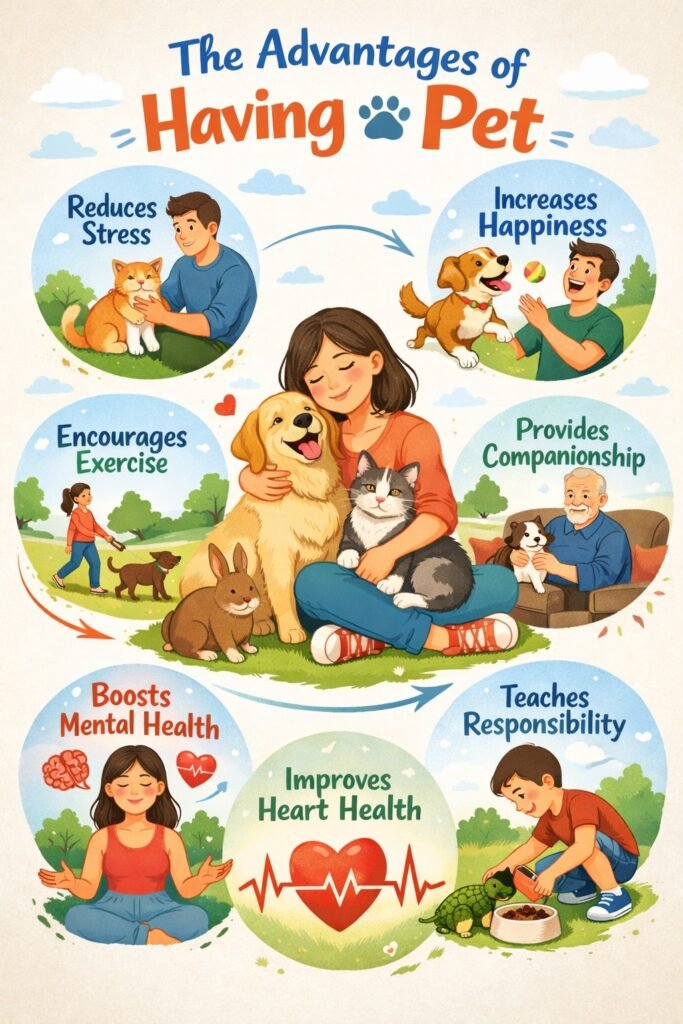
The Advantages of Having a Pet
Pets have been an integral part of human life for thousands of years. From the earliest days when humans domesticated animals for companionship, hunting, and protection, the bond between humans and their pets has only grown stronger. In the modern world, pets are no longer kept merely for utility—they’ve become cherished members of our families, offering emotional comfort, unconditional love, and even physical health benefits. The advantages of having a pet stretch far beyond companionship; they touch every aspect of our physical, emotional, social, and mental well-being.
1. Emotional Companionship and Unconditional Love
Perhaps the most profound advantage of having a pet is the emotional connection they provide. Pets—especially dogs and cats—offer an unwavering source of companionship. They don’t judge or criticize; instead, they offer loyalty and affection regardless of our moods or mistakes. For many people who live alone, pets become family. Their presence fills the home with warmth and helps reduce feelings of loneliness or isolation.
Studies have shown that people who own pets experience lower levels of depression and anxiety. The simple act of petting a dog or cat releases oxytocin, a hormone associated with bonding and stress relief. The unconditional love pets give creates a sense of belonging and purpose. When you’ve had a rough day, coming home to a wagging tail or a purring cat can instantly lift your spirits.
2. Physical Health Benefits
Owning a pet can positively influence physical health in several ways. For dog owners, regular walks mean consistent physical activity. Individuals who walk their dogs regularly tend to have lower blood pressure, improved cardiovascular health, and a reduced risk of obesity. The need to exercise one’s pet naturally builds a more active lifestyle.
Pets can also contribute to heart health beyond just exercise. Research indicates that interacting with pets helps lower cholesterol and triglyceride levels, contributing to better long-term heart health. Furthermore, pet owners often recover more quickly from illnesses and surgeries, as their pets’ presence helps reduce stress and promote physical healing through increased motivation and positivity.
Another interesting health benefit lies in immunity. Children who grow up in households with pets—especially dogs—are less likely to develop allergies and asthma. Exposure to pet dander and the bacteria pets bring into the house helps strengthen the immune system from an early age.
3. Mental Health Support and Stress Reduction
In today’s world, mental health challenges are increasingly common. Pets offer an effective, natural way to combat stress, anxiety, and depression. Their constant presence provides comfort and emotional grounding in difficult times.
Therapy animals, particularly dogs, are now widely used in hospitals, nursing homes, and therapy sessions. Their calming influence has been proven to help patients manage pain, reduce anxiety, and even improve social interactions. Merely spending time with a pet can reduce the level of cortisol (a stress hormone) in the body and increase serotonin and dopamine levels—neurotransmitters that help regulate mood and happiness.
For individuals struggling with trauma, PTSD, or severe anxiety, pets can provide a sense of safety and routine. Service animals, such as emotional support dogs, are trained to detect anxiety attacks or depressive episodes and comfort their owners accordingly. This emotional stability can be life-changing for those in need.
4. Encouraging Responsibility and Routine
Caring for a pet demands discipline, time, and effort, all of which cultivate responsibility. Feeding, grooming, exercising, and attending to a pet’s health teach consistency and empathy. For children, pets are often their first experience of responsibility. They learn about nurturing, patience, and the importance of commitment.
Adults, too, benefit from the structure that pet care provides. The daily routine of walking a dog or feeding a cat gives rhythm to the day, which can be particularly important for people recovering from depression or other mental health conditions. The sense of being needed—even by a small animal—gives people purpose and motivation to stay organized and engaged in life.
5. Social Interaction and Community Building
Pets can also be powerful social connectors. Taking your dog for a walk, visiting a pet park, or attending pet-related events often leads to social interactions with other pet owners. These casual conversations can develop into meaningful friendships, creating a sense of belonging and community.
Pet ownership also builds empathy and understanding among individuals. People who care deeply about animals often share similar values of compassion, kindness, and respect, which can lead to strong community bonds. For children, having a pet can teach valuable social lessons—how to be gentle, how to share, and how to communicate without words.
6. Entertainment and Joy
Pets are natural entertainers. They bring laughter and playfulness into any home. Whether it’s a dog excitedly chasing its tail, a cat batting at a toy, or a parrot mimicking human speech, pets effortlessly brighten our days. Their unpredictable antics often relieve tension in households and bring family members together to share moments of joy.
In many families, pets become the focal point of joyful routines—morning walks, playtime, or cuddles before bed. These small yet significant moments contribute to a happier and more fulfilling life.
7. Companionship for the Elderly
For elderly individuals, pets play an especially crucial role. They provide companionship, alleviate loneliness, and help maintain cognitive and physical health. Walking a pet keeps seniors active, while the simple act of talking to and caring for an animal enhances mental stimulation.
Pets also create emotional stability for older people who may be grieving or feeling isolated. Studies have shown that elderly pet owners report higher happiness levels and lower stress compared to non-pet owners. Additionally, therapy animals in nursing homes and assisted living facilities have been found to improve residents’ moods, reduce agitation, and promote social interactions.
8. Security and Assistance
Beyond companionship, many pets serve practical functions that enhance safety and independence. Dogs are natural protectors; their alertness and loyalty make them excellent guardians for homes and individuals. A barking dog can deter intruders, and their heightened senses help detect dangers that humans may miss.
Service animals, such as guide dogs for the visually impaired or assistance dogs for individuals with physical disabilities, provide invaluable support. These trained animals extend their owners’ capabilities, offering both safety and independence. Their intelligence and dedication underscore the powerful potential of the human-animal partnership.
9. Educational and Developmental Benefits
For children, having a pet can profoundly influence emotional and social development. Caring for a pet teaches compassion, empathy, and the importance of responsibility. It helps children understand the value of routine and the effort required to care for another living being.
Furthermore, pets can enhance learning. Therapists often use “reading dogs” programs where children read aloud to therapy animals, improving literacy and confidence in a relaxed, judgment-free environment. Kids who grow up with pets also tend to develop stronger emotional intelligence, better social skills, and deeper respect for animals and nature.
10. Sense of Purpose and Fulfillment
Owning a pet gives people something—or someone—to care for, which can create a sense of purpose. This is particularly meaningful for individuals who live alone, retirees, or those experiencing life transitions. Knowing that another being depends on you for love, food, and shelter can be tremendously motivating.
This sense of purpose often improves self-esteem and emotional well-being. The bond between pet and owner is mutual—while pets rely on us for their basic needs, they repay that care through love, loyalty, and devotion.
Conclusion
The advantages of having a pet go far beyond simple companionship. Pets enrich our lives emotionally, physically, and socially. They reduce stress, improve health, teach valuable life skills, and fill our homes with laughter and affection. Whether it’s the loyalty of a dog, the calm presence of a cat, or the song of a bird, pets touch the human heart in ways that few other relationships can.
In a busy and often stressful world, pets remind us of what truly matters—love, care, and connection. By welcoming a pet into our lives, we not only gain a friend but also open ourselves to a deeper, more compassionate way of living.