What to Feed Stray Cats: Dos and Don’ts
Stray cats are a common sight in many neighborhoods, and many compassionate individuals feel compelled to help by providing food and care. Feeding stray cats can improve their health, reduce their risk of starvation, and foster a sense of trust. However, feeding stray cats comes with responsibilities and considerations to ensure their wellbeing and safety. Knowing what to feed them, how often, and what to avoid can make a significant difference. Here’s a detailed guide on the dos and don’ts of feeding stray cats.
Why Feeding Stray Cats Matters
Stray cats live without consistent access to food, shelter, or medical care. They often scavenge in garbage or hunt small prey, which may not provide adequate nutrition. By feeding them nutritious food, you can help reduce malnutrition, improve their immune system, and enhance their chances of survival, especially during harsh weather conditions. Feeding stray cats can also help build trust, making it easier to assist them with veterinary care or find them permanent homes.
Dos: What You Should Do When Feeding Stray Cats
Provide Nutritious, Balanced Food
Stray cats require a diet that meets their nutritional needs. High-quality commercial cat food, either dry kibble or wet canned food, is the best choice because it contains essential proteins, fats, vitamins, and minerals. Wet food is particularly beneficial because it provides hydration, which is important for cats who may not have regular access to water.
Offer Fresh Water Daily
Always ensure fresh, clean water is available alongside food. Hydration is crucial for a cat’s health, especially if they primarily eat dry food. Change the water daily and clean the water bowl regularly to prevent contamination.
Feed at Regular Times
Try to feed stray cats at the same times daily. This helps them develop a routine and reduces wandering in search of food. Consistent feeding times can also help you monitor the cats’ health and behavior over time.
Use Clean Bowls or Disposable Containers
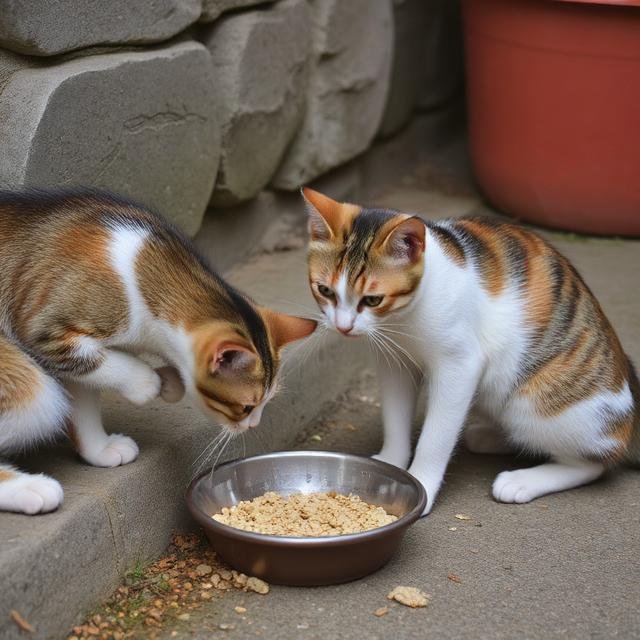
Provide food in clean bowls or disposable containers to maintain hygiene and reduce the spread of diseases. Clean feeding areas regularly to avoid attracting pests or causing unpleasant odors.
Consider Spaying and Neutering
Feeding stray cats often leads to forming bonds. If possible, collaborate with local animal welfare organizations to trap, neuter, and release (TNR) the cats. This helps control the population and improves the health and behavior of the cats.
Observe from a Distance
While feeding, keep a respectful distance to avoid stressing the cats. Allow them to eat calmly and avoid sudden movements. Over time, they may become more comfortable around you, facilitating further care if needed.
Don’ts: What to Avoid When Feeding Stray Cats
Don’t Feed Them Human Food or Junk Food
Avoid giving stray cats human food such as bread, rice, dairy products, chocolate, onions, or processed snacks. Many human foods are toxic or nutritionally inadequate for cats and can cause digestive upset or poisoning. Fatty foods can lead to pancreatitis, and dairy often causes diarrhea in adult cats.
Don’t Overfeed
While it’s tempting to provide large amounts of food, overfeeding can lead to obesity and health problems. It can also attract unwanted wildlife or pests. Feed only what the cats can consume in one sitting and remove leftover food promptly.
Don’t Feed in Areas That Disturb Neighbors
Be mindful of where you feed stray cats. Avoid busy streets, areas near homes, or places where food scraps might create nuisances or conflicts with neighbors. Choose quiet, safe spots that provide some shelter and minimal disturbance.
Don’t Ignore Signs of Illness
If you notice stray cats with visible signs of illness—such as discharge from eyes or nose, coughing, limping, or lethargy—contact a local animal rescue or veterinarian. Feeding alone won’t address medical needs, and sick cats require professional care to recover and prevent disease spread.
Don’t Leave Food Out Overnight
Leaving food out overnight can attract rodents, raccoons, or larger predators, putting stray cats at risk. Feed during the day or early evening and remove any leftovers promptly.
Additional Tips
- Use Cat-Specific Food:If you can’t access commercial cat food, wet canned tuna (in water, not oil) can be an occasional treat but shouldn’t replace balanced meals.
- Patience is Key:Stray cats may take time to trust you. Consistent feeding and gentle behavior will help build a bond.
- Provide Shelter:If possible, offer simple shelter options to protect cats from harsh weather.
Conclusion
Feeding stray cats is a compassionate act that can greatly improve their lives. By providing nutritious food, fresh water, and a safe feeding environment, you contribute to their health and wellbeing. Equally important is avoiding harmful foods, overfeeding, and unsafe practices that can cause more harm than good. With understanding and care, you can make a positive difference in the lives of stray cats and help create a safer, healthier community for all animals.
#HelpingHandsAnimalWelfareFoundation